
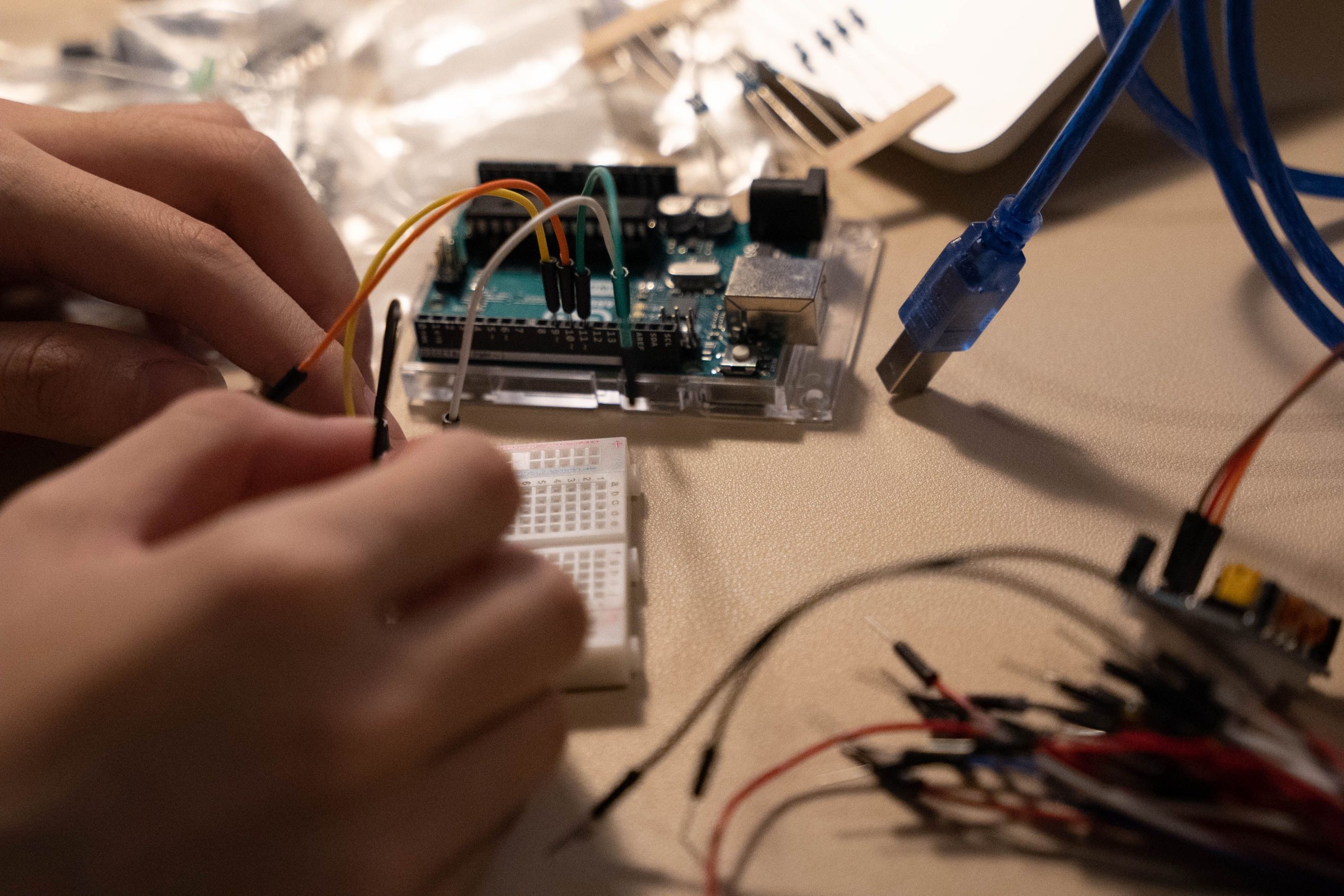

Structured, practical, and sustainable STEAM learning
STEAM Education & Innovation
Connect science, technology, engineering, arts, and mathematics with inquiry, design thinking, projects, real-life challenges, and institutional goals.
A structured approach
Beyond isolated activities
SkyEdu approaches STEAM as a structured educational transformation model, not as a collection of isolated activities.
The model helps institutions move from traditional content delivery toward active learning, inquiry, design thinking, experimentation, interdisciplinary teaching, and project-based learning.
The SkyEdu STEAM model
Five pillars for institutional implementation
Curriculum Integration
Connect activities with learning outcomes, academic standards, and existing curricula.
Teacher Capacity Building
Prepare teachers and facilitators to design, deliver, assess, and sustain STEAM learning.
Project- and Inquiry-Based Learning
Create space for investigation, experimentation, design, prototyping, reflection, and problem-solving.
Innovation and Digital Transformation
Connect STEAM with AI, robotics, data, digital tools, sustainability, and community innovation.
Quality, Assessment, and Sustainability
Monitor outcomes, document progress, evaluate impact, and sustain STEAM institutionally.
Palestinian STEAM Network
Experience translated into working models
SkyEdu experts have contributed to the Palestinian STEAM Network through operational manuals, training plans, implementation frameworks, governance tools, and practical working models that support a move from fragmented activities to structured and sustainable programs.
Strategic value
- Connect learning more closely to real life
- Strengthen engagement, creativity, critical thinking, collaboration, communication, and problem-solving
- Support teachers in applying modern instructional methods
- Build a culture of experimentation, inquiry, and design
- Prepare learners for future skills and emerging fields
- Support quality through clearer outcomes, implementation tools, and assessment methods
Service scope
Clear support, audiences, and outputs
The final scope is confirmed after SkyEdu understands the institution’s current position and priorities.
What We Offer
- Design complete STEAM programs and implementation frameworks
- Integrate STEAM into existing curricula and learning outcomes
- Design interdisciplinary, project-based experiences tied to real-life challenges
- Prepare operational manuals and institutional implementation guides
- Develop practical training for teachers, facilitators, coordinators, and leaders
- Support STEAM clubs, innovation spaces, learning labs, maker spaces, and interactive corners
- Connect STEAM with AI, robotics, data, sustainability, and community innovation
- Develop assessment, monitoring, and evaluation tools
Who It Is For
- Schools strengthening practical and interdisciplinary learning
- Institutions modernizing science, mathematics, technology, or innovation programs
- Universities and teacher-education centers
- Training centers and educational organizations working in youth, creativity, or innovation
- Funded projects that need structured models, manuals, training, and measurable outcomes
- Institutions establishing STEAM clubs, innovation labs, maker spaces, or interactive learning environments
Expected Deliverables
- Complete STEAM program framework and implementation plan
- STEAM operational manual
- Teacher training manual, facilitator guide, and student activity guide
- Curriculum integration and competency-mapping tools
- Project-based learning models and activity templates
- Assessment, observation, monitoring, and evaluation tools
- Model for a club, innovation lab, maker space, or interactive learning corner
- Sustainability and scaling plan
How the work progresses
Five stages connected to implementation
Each stage is adapted to the service and agreed institutional scope.
Understanding the Need
Understand the institution’s reality, goals, and challenges.
Output: Needs summary and initial scope.
Diagnosis and Analysis
Review documents, systems, curricula, and procedures.
Output: Gap and development opportunity report.
Solution Design
Propose a clear action plan and measurable deliverables.
Output: Action plan and implementation timeline.
Implementation and Capacity Building
Support the institution in implementation and train work teams.
Output: Templates, tools, and practical training.
Evaluation and Improvement
Measure progress and provide sustainability recommendations.
Output: Evaluation and continuous improvement report.
Continue exploring
Related services
Discuss steam education & innovation with SkyEdu
Begin with the institution’s need, current context, and desired deliverables.